
"coffee growing climate"
10000 article(s) found

Introduction to the origin of coffee in Rwanda
Since the 1920s, Arabica coffee grown in Rwanda has been famous for its unique fruit sweetness and rich grass aroma. In recent years, the Rwandan government has taken positive measures to vigorously promote coffee production, set up coffee production cooperatives in various places, and give technical guidance and financial support to farmers, so that coffee production has made considerable progress. From Rwanda.

A brief introduction to the altitude and climate of the cultivation of Mazu coffee in Alishan, Taiwan
In 1941 (the 16th year of Rizhaohe), most of the raw beans were shipped back to Japan. The planting area of coffee in Taiwan has reached 75 hectares, and it was called the largest coffee factory in the far East in its heyday. In 1945 (Rizhaohe 20 years), the area of coffee cultivation in Taiwan expanded to 113 hectares after the war. After the surrender of Japan, Taiwan was restored, and the national government strongly advocated the reclamation of fertile land and the cultivation of cash crops.

A brief introduction to the market price of Columbia's exquisite boutique coffee beans
The annual temperature there is about 18 degrees Celsius, the annual rainfall is 2000 to 3000 mm, latitude 1-11 15 north, longitude 72-78 west, the specific range can exceed 2.000 meters above sea level. By a special combination of factors, the latitude, altitude, soil, plant origin of species and varieties of coffee in the coffee growing areas of Colombia, the climate and tropics of the coffee growing areas

Rwanda bourbon boutique coffee (Rwanda Bourbon Specialty)
Rwanda is known as the country of a thousand hills, with many mountains and plateaus, and most areas are tropical plateau climate and savanna climate, mild and cool. There are about 33000 hectares of coffee plantations and 500000 people are engaged in the coffee industry. With good natural conditions of high altitude and fertile volcanic soil, the country's fertile soil and suitable climate contribute to plant growth, and coffee trees seem to be driven.

Description of roasting degree and Flavor of Columbia Linglong Coffee introduction of Grinding scale varieties
Columbia Linglong Coffee roasting degree Flavor description Grinding scale varieties introduce the latitude, altitude, soil, plant origin of species and varieties of coffee in Colombian coffee growing areas, rain patterns produced by climate and tropical convergence in coffee growing areas, changing topography, luminosity, favorable temperature range throughout the year, moderate amounts and rain in one day

A brief introduction to the Market Price of Columbia's exquisite Fine Coffee Bean varieties
The annual temperature there is about 18 degrees Celsius, the annual rainfall is 2000 to 3000 mm, latitude 1-11 15 north, longitude 72-78 west, the specific range can exceed 2.000 meters above sea level. By a special combination of factors, the latitude, altitude, soil, plant origin of species and varieties of coffee in the coffee growing areas of Colombia, the climate and tropics of the coffee growing areas

A brief introduction to the market price of Columbia's exquisite boutique coffee bean varieties
The annual rainfall is 2000 to 3000 mm, latitude 1-11 15 north and longitude 72-78 west. The specific range of elevation is more than 2.000 meters. By a special combination of various factors, the latitude, altitude, soil, plant origin of species and varieties of coffee in the coffee growing area of Colombia, the rain pattern produced by the climate and tropical convergence of the coffee growing area, in one.

Hawaiian Kona Coffee with an island climate introduces the Manoa Valley of Oahu.
Hawaii is a paradise for tasting and buying coffee. Each island has several unique places for tourists and local residents to taste and buy coffee, including comfortable and warm shops and comprehensive centers to introduce coffee knowledge. In Hawaii, you can watch the fiery sunset sink into the red-orange sea, feel the fresh air filled with the scent of flowers, and sit by the sea and have a drink

Coffee producing areas in Rwanda Coffee roasting Color
Rwanda is known as the country of a thousand hills, with many mountains and plateaus, and most areas are tropical plateau climate and savanna climate, mild and cool. There are about 33000 hectares of coffee plantations and 500000 people are engaged in the coffee industry. With good natural conditions of high altitude and fertile volcanic soil, the country's fertile soil and suitable climate contribute to plant growth, and coffee trees seem to be driven.

The cultivation of boutique coffee beans in Agua Durse, Guatemala, geographical location, climate sea.
Every 30 years or so, the area near Antigua is hit by a volcanic eruption, which provides more nitrogen to the already fertile land, and sufficient rainfall and sunlight make the place more suitable for growing coffee. Its coffee belt is distributed over 1500 meters, between 14 and 16 degrees north latitude, and it is easy to grow very hard beans, all of which are washed.
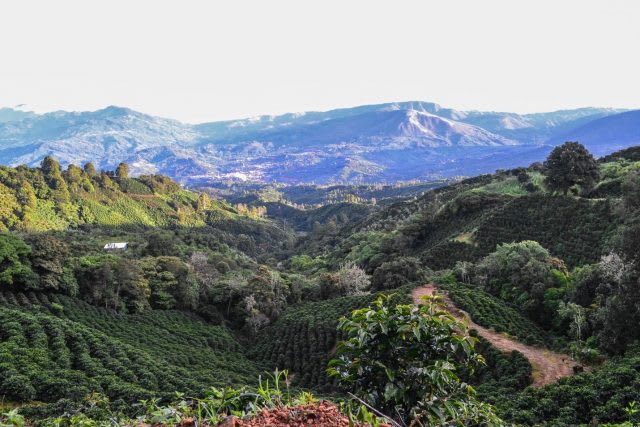
What are the local conditions? What is the effect of local conditions on the flavor of coffee?
Professional coffee knowledge exchange more coffee bean information please follow the coffee workshop (Wechat official account cafe_style) What Is Terroir and How Does It Affect Your Coffee We often hear the word "local conditions" when talking about coffee, but what exactly does "local" mean? Does it have anything to do with the flavor of coffee? Why do we need to care about the local environment? Author mining

A brief introduction to the description of the flavor and aroma characteristics of Columbia's exquisite coffee beans
The annual rainfall is 2000 to 3000 mm, latitude 1-11 15 north and longitude 72-78 west. The specific range of elevation is more than 2.000 meters. By a special combination of various factors, the latitude, altitude, soil, plant origin of species and varieties of coffee in the coffee growing area of Colombia, the rain pattern produced by the climate and tropical convergence of the coffee growing area, in one.

Colombian coffee growing environment
The suitable climate in Colombia provides a real natural pasture for coffee. Coffee trees in Colombia are mainly cultivated in the Andes, on steep slopes about 1300 meters above sea level, where the annual temperature is about 18 degrees Celsius, annual rainfall is 2000 to 3000 millimeters, latitude 1-11 15 north, longitude 72-78 west, and the specific range of elevation can exceed 2.000 meters. By

Colombian coffee growing environment
The suitable climate in Colombia provides a real natural pasture for coffee. Coffee trees in Colombia are mainly cultivated in the Andes, on steep slopes about 1300 meters above sea level, where the annual temperature is about 18 degrees Celsius, annual rainfall is 2000 to 3000 millimeters, latitude 1-11 15 north, longitude 72-78 west, and the specific range of elevation can exceed 2.000 meters. By

What conditions do coffee trees need for planting? do they have high requirements on local climate?
The origin of the coffee tree is Ethiopia in Africa. In botany, coffee trees belong to the evergreen trees of the subgenus Rubiaceae, and coffee beans, commonly known as coffee beans, are the seeds of the fruit of coffee trees, just because they are shaped like beans, so they are called coffee beans. Climate is the decisive factor for coffee cultivation. Coffee trees are only suitable for growing in the tropics or subtropics, so latitude 25 is south and north.

Abnormal climate in Costa Rica affects coffee production
According to the latest report released by the Costa Rican Coffee Authority, coffee production in the country has plummeted by nearly 30 per cent in the past decade, including a 15 per cent drop in 2011 compared with the same period last year. The report also pointed out that although the increase in production costs, price fluctuations in the international market and domestic policy changes have led to a decline in coffee production year by year, the main reason is the intensification of climate change. Costa Rica is the main coffee in the world

Costa Rican coffee industry reduced due to climate
Due to the decline in coffee prices on the international market, Costa Rican coffee exports totaled US $306 million in 2015, down 26% from US $412 million in 2012, Costa Rica reported on May 12. In the first quarter of 2016, the average world price of coffee was $1.14 per liter, down 26 per cent from the same period in 2014. Affected by climate change and diseases and insect pests at the same time, the coffee growing area of Colombia

A brief introduction to the cultivation of Ugandan boutique coffee beans, geographical location, climate and altitude
Ugandan coffee beans have a unique flavor of delicate taste, which is very suitable for making Italian and other flavors of coffee. More importantly, Ugandan coffee beans are strictly screened according to the standards of the international market to ensure their high quality and pollution-free characteristics. Uganda is a landlocked country in eastern Africa, straddling the equator, bordering Kenya to the east, Tanzania and Rwanda to the south, and the Democratic Republic of the Congo to the west.

Antigua Coffee Bean Flavor Characteristics Information about growing area History Variety Growing environment
Professional barista exchanges, please pay attention to coffee workshop (Weixin Official Accounts cafe_style ) The most brilliant center of Maya civilization Guatemala has a unique geographical environment in Central America, with North America in the north and South America in the south. Due to the Caribbean Sea and the Gulf of Mexico, the climate is relatively hot and humid, and it has always been an important coffee producing area in the world. For over a hundred years, coffee has been a staple.